
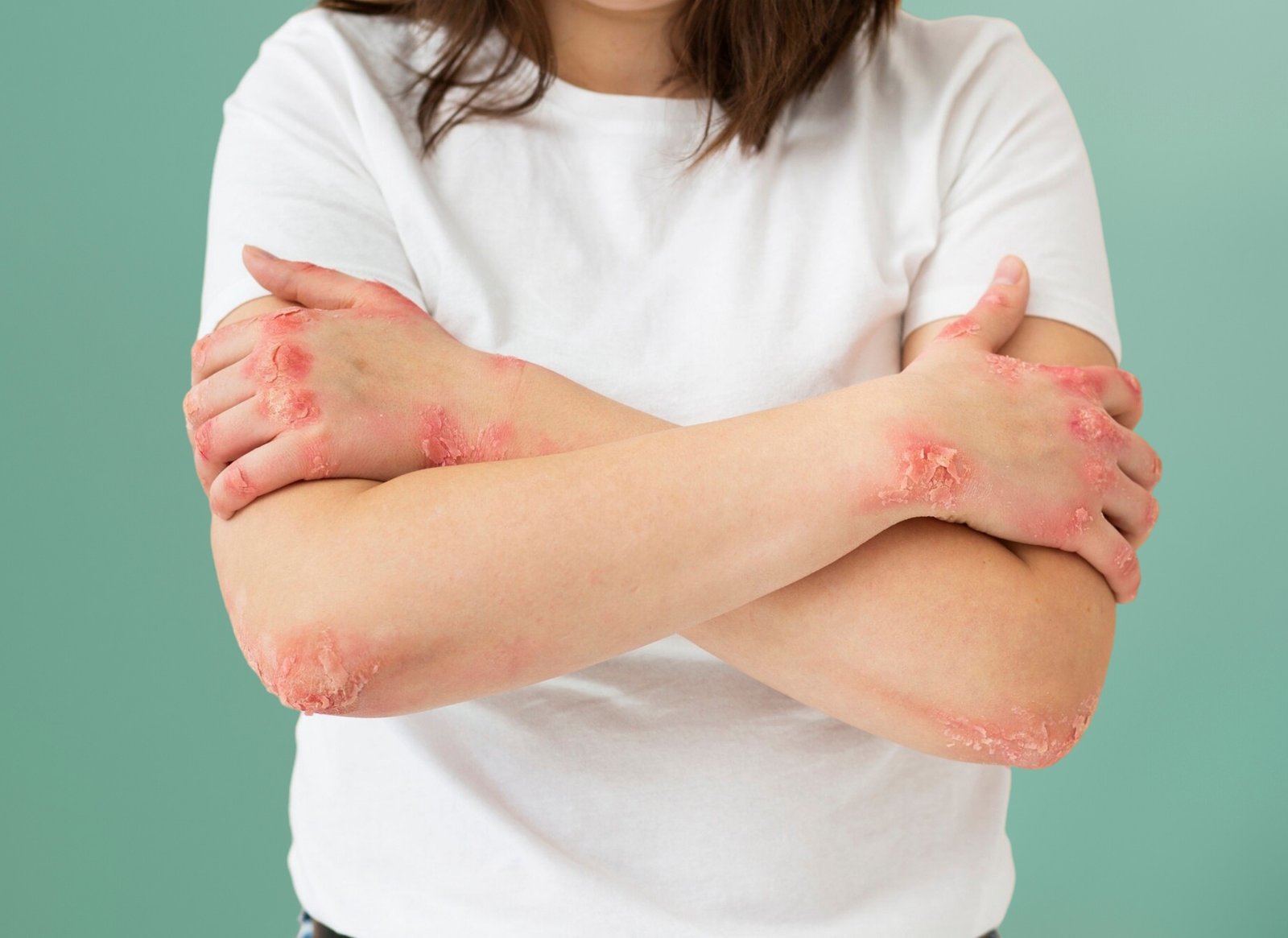
Psoriasis is more than just a skin issue. It’s a long lasting condition where your immune system works faster than it should, causing skin cells to build up rapidly. These extra cells form red, dry, scaly patches that can feel itchy, painful, or even sore. While it often shows up on the skin, it can also impact confidence, mood, and daily comfort.
For many, psoriasis can be confusing because it looks different on different skin tones, reacts uniquely in each body, and tends to flare without warning. One thing is certain, though: it isn’t contagious, and it’s not caused by poor hygiene. It’s a chronic condition that can be managed with the right approach, support, and care.
What Causes Psoriasis?
Psoriasis comes from an overactive immune system that speeds up the skin cell production cycle. Normally, skin cells regenerate in 30 days, but in psoriasis, this can happen in 3-7 days. Because cells grow too quickly, they pile up on the surface and lead to patches or plaques.
Researchers still don’t know one exact cause, but genetics and immune response play a big role. It often runs in families, meaning if someone in your home has had it, your chances can increase too.
Here are the main contributors:
- Immune system imbalance that attacks healthy skin cells
- Genetics passed through family history
- Environmental triggers like weather, stress, infections
- Lifestyle triggers like smoking, alcohol, or medications
Early Signs You Shouldn’t Ignore
Psoriasis usually begins quietly. In the early stages, many people mistake it for dryness, allergic reactions, dandruff, or eczema. But unlike regular dry skin, psoriasis patches often have a silvery layer and tend to reappear even after moisturizing.
The signs can vary, but most often include:
- Raised red patches covered in silvery scales
- Itching or burning in certain areas
- Flaky scalp that resembles heavy dandruff
- Small bleeding spots when scales are scratched
- Dry, cracked skin that may cause discomfort
These symptoms may come and go. Some days your skin may look calm, and other days it may flare suddenly.
Common Types of Psoriasis
Psoriasis isn’t one single condition. There are multiple types, each affecting the body differently. Some appear in small spots, while others cover larger areas. Some are triggered by stress, while others can occur due to illness or infections.
1. Plaque Psoriasis
This is the most common form. It creates raised, red patches with silver-white flakes. It mostly shows on elbows, knees, scalp, or lower back. The patches may itch or feel sore, especially during flare ups.
2. Guttate Psoriasis
Often triggered by streptococcal infections, this type appears like small drop-shaped spots. Kids and young adults are more likely to experience this type. It can sometimes go away on its own, but may return during infections or illness.
3. Inverse Psoriasis
This occurs in skin folds like underarms, groin, or under the chest. Instead of dry scales, this type looks shiny, smooth, and inflamed, and may worsen with friction or sweating.
4. Pustular Psoriasis
This type forms white pus-filled bumps with red skin underneath. It can be painful and may even cause fever or fatigue. It requires quick attention, especially if it spreads rapidly.
5. Erythrodermic Psoriasis
A rare but serious form that can cover large parts of the body with red peeling rash. It can be dangerous if untreated and needs medical help immediately.
Major Triggers That Cause Flare Ups
A trigger is something that doesn’t cause psoriasis but can make it worse or start a flare. Each person has different trigger points, so identifying them early can help manage symptoms more effectively.
Most reported triggers include:
- Stress emotional or physical stress can activate flare ups
- Cold weather that dries out the skin
- Smoking & alcohol both increase inflammation
- Infections especially throat infections or flu
- Skin injury cuts, burns, sunburns, even tattoos
- Certain medications like beta-blockers or lithium
Keeping a symptom diary can help track what triggers your skin most often.
The Emotional Side of Psoriasis
What many don’t realize is that psoriasis impacts more than the skin. The visible nature of the condition often leads to emotional challenges. People may feel misunderstood, judged, or uncomfortable in social situations. It’s not the symptom they struggle with most, but the response from the outside world.
Psoriasis can contribute to:
- Low self esteem and body image issues
- Social anxiety and withdrawal
- Feeling frustrated with unpredictable flare ups
- Stress that ironically triggers more flare ups
This creates a cycle that becomes hard to break without support. Talking to a doctor, therapist, or support group can make a difference.
How Psoriasis Is Diagnosed
Doctors usually diagnose psoriasis by examining the skin and reviewing medical history. In rare cases, a small skin biopsy is taken for testing.
The process often involves:
- Checking family history
- Reviewing symptoms and lifestyle
- Observing patterns of flare ups
- Identifying visual signs and patches
There is no single blood test that confirms psoriasis, making patterns and symptoms key in diagnosis.
How to Manage Psoriasis Naturally
While medication can help, daily habits and lifestyle can significantly ease flare ups. Managing psoriasis is about calming inflammation from the outside and inside.
Daily Skin Care Musts
- Use fragrance-free, gentle cleansers
- Apply thick, medicated or therapeutic moisturizers
- Avoid scrubbing or scratching patches
- Switch to lukewarm showers instead of hot water
Food & Lifestyle
- Include anti-inflammatory foods like fish, nuts, seeds, and greens
- Avoid highly processed foods, sugar, and alcohol
- Drink enough water to hydrate skin from within
- Get sunlight for Vitamin D, but avoid sunburn
Stress & Sleep
- Try meditation, breathing exercises, or yoga
- Prioritize 7 8 hours of sleep daily
- Take mental health breaks when flares feel overwhelming
Medical Treatment Options
Doctors may suggest different treatments depending on severity. Some options include:
- Topical creams to reduce inflammation and scaling
- Phototherapy using controlled UV light exposure
- Systemic medicines that work from inside the body
- Biologic drugs to target immune system activity
Treatment is not one-size-fits-all. What works for one person may not work the same for another.
Foods That May Help or Harm
✅ Helpful Foods:
- Salmon, sardines (rich in omega 3)
- Leafy greens, berries, nuts
- Olive oil, turmeric, ginger
- Green tea
❌ Foods to Limit:
- Sugar and sugary drinks
- Red meat, processed snacks
- Alcohol and smoking
- High-fat fried foods
Do’s and Don’ts for Daily Life
Do’s:
- Keep skin moisturized daily
- Use sunscreen even on cloudy days
- Wear soft, breathable clothing
- Handle flare ups with patience
Don’ts:
- Don’t scratch even if it itches
- Don’t skip moisturizer after shower
- Don’t use harsh chemical-based soaps
- Don’t compare your skin to others
Can Psoriasis Be Cured?
Right now, there is no permanent cure, but there are plenty of ways to manage it so well that flares reduce drastically and sometimes disappear for long periods. It’s not about removing psoriasis completely, it’s about controlling it so it doesn’t control you.
Many people live active, confident, and healthy lives with psoriasis by following the right treatment plan and lifestyle adjustments. Psoriasis can feel unpredictable, frustrating, and exhausting, especially when it keeps returning. But understanding your body, avoiding triggers, and taking consistent care can make a massive difference. You’re not alone in this journey, and your skin is not a limitation. You deserve comfort, care, and confidence, regardless of what your flare looks like today.
If you or someone you know is dealing with psoriasis and struggling to find a plan that works, consider speaking to a dermatologist or skin specialist who can guide you with the right treatment path. Sometimes one conversation can be the first step to real relief.
Disclosure: If this page mentions or links to specific products, these are for general information only. They are not a substitute for medicines or treatment prescribed by your own doctor. Always consult a healthcare professional before starting, stopping, or changing any medication.


