
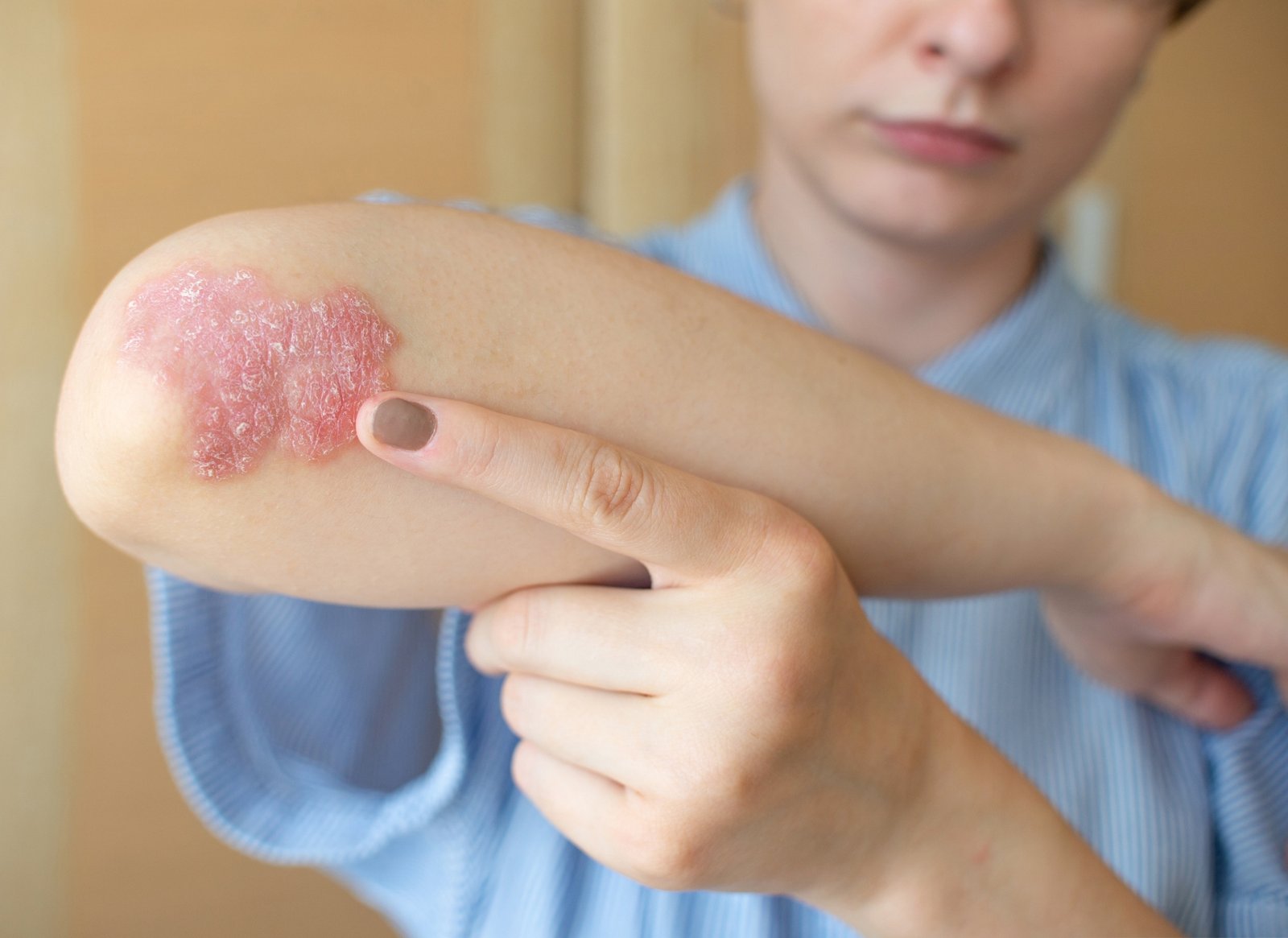
You know how a tiny itch can distract your whole day? Now imagine that sensation showing up over and over, paired with visible red, flaky patches that invite unwanted questions. That’s the lived reality of psoriasis for millions around the world. It isn’t contagious, it isn’t caused by poor hygiene, and it definitely isn’t “just a rash.” It’s a long-term autoimmune condition that can affect not just the skin, but confidence, comfort, and emotional well-being too.
There’s a quiet struggle behind psoriasis. Some people feel it physically, others mentally, many experience both. One day the skin might feel calm and manageable. Another day, it might flare without warning. The unpredictability is often harder than the condition itself. Understanding psoriasis isn’t about learning medical facts alone it’s about recognizing the human reality behind it.
What Psoriasis Really Is
Psoriasis happens when the immune system becomes overactive and speeds up skin cell production. Normally, skin cells renew every 28–30 days. In psoriasis, it can happen in 3–5 days. The extra cells rise to the surface fast, forming patches that can look red, scaly, or silvery. These patches may itch, crack, or even burn depending on the individual and the flare.
It’s not caused by touching someone, sharing clothes, or sitting next to them. Yet, misinformation still makes people afraid of it. The condition is driven by genetics and immune responses, sometimes influenced by everyday triggers like stress, weather, or infections. For many, the physical discomfort is only half the story. The emotional and social weight of psoriasis often goes unnoticed.
Quick breakdown
- Autoimmune condition causing rapid skin cell buildup
- Not contagious in any way
- Can appear anywhere, commonly on elbows, knees, scalp, and nails
- Comes in cycles of flare-ups and remission
Why Psoriasis Is More Than Skin Deep
Most people see psoriasis on the surface, but its real impact lives beneath it. It can affect sleep, self-confidence, clothing choices, social interactions, and even everyday movement if joints are involved. Scratching isn’t a habit it’s a reflex. Hiding scars isn’t vanity it’s protection. Wanting flare-free days isn’t luxury it’s relief.
Living with psoriasis often means calculating more than skincare routines. People measure humidity levels, check seasonal changes, avoid certain foods, switch detergents, and mentally prep for social reactions. The condition becomes part of daily life, even on days it isn’t visible.
Common unseen challenges
- Self-consciousness in public spaces
- Avoiding dark clothing to hide flakes
- Sleep disturbed by night-time itching
- Emotional exhaustion during flares
Different Types People Experience
Psoriasis isn’t one-size-fits-all. It shows up differently for each person, and even the same person may experience different types over time. The patches might be small, widespread, painful, itchy, or sometimes completely symptom-free apart from appearance. Understanding the type helps with better management and realistic expectations.
Most common types
- Plaque Psoriasis: Raised red patches with silvery scales
- Scalp Psoriasis: Flaky patches that can resemble severe dandruff
- Guttate Psoriasis: Small drop-like marks triggered by infection
- Inverse Psoriasis: Occurs in skin folds like underarms, groin
- Psoriasis Arthritis: Includes joint pain, stiffness, swelling
What Triggers a Psoriasis Flare
Flares rarely happen out of nowhere. There are usually triggers, and they differ dramatically from person to person. Some people react to stress, others to cold weather. A food item may trigger one person and have zero impact on another. Identifying triggers is like detective work it takes time, patience, and observation.
Some days, even the triggers feel unfair. A stressful week at work. A common cold. Dry winter air. A sleepless night. All these normal life events can sometimes spark a flare. That’s why managing psoriasis is less about finding a “cure” and more about balancing a lifestyle that reduces stress on the body.
Common triggers include
- Stress and anxiety
- Cold, dry weather
- Skin injury, cuts, or sunburn
- Smoking or alcohol consumption
- Certain medications and infections
How It Can Affect Mental Health
It’s not dramatic to say psoriasis can be emotionally heavy. Studies have shown higher rates of anxiety and depression among people with chronic skin conditions. It’s not because of the condition itself, but because of the social pressure, constant management, and unpredictability. When the world expects “perfect” skin, anything different can feel isolating.
The mental load isn’t about vanity. It’s about being stared at. Being asked personal questions. Feeling the need to explain yourself repeatedly or even worse being met with silence and assumptions. Mental health support isn’t optional for many living with psoriasis, it becomes a necessary part of overall well-being.
Emotional effects may include
- Lower self-esteem during flares
- Fear of judgment in public settings
- Social withdrawal
- Stress-induced flare cycles
What Actually Helps Manage Psoriasis
There is no universal formula, but there are patterns that help many people manage symptoms and reduce flare frequency. Management is holistic not just creams or pills. It includes habits, routines, environment, stress control, and sometimes medical guidance. Progress isn’t always linear, and that’s normal.
Treatment paths often evolve as the body responds differently over time. What works at 22 might not work at 30. Weather, hormones, stress levels everything plays a role. The real win lies in consistency, awareness, and gentle self-care instead of harsh quick fixes.
Supportive approaches include
- Keeping skin moisturized regularly
- Avoiding known personal triggers
- Low-stress lifestyle practices
- Doctor-recommended therapies when needed
- Balanced food and hydration
Daily Habits That Can Make a Difference
Small daily choices can influence how the skin feels, even if they don’t erase the condition. Hydration, gentle skincare, breathable fabrics, and reducing inflammation through food or stress control can collectively improve quality of life. It’s not about perfection, it’s about creating a routine that supports the body instead of fighting it.
Consistency beats intensity here. A gentle habit followed regularly is more effective than an aggressive routine followed occasionally. People often notice fewer flares when they treat the condition like a long-term conversation, not a battle to win overnight.
Simple daily practices
- Moisturize immediately after showering
- Use mild, fragrance-free skincare
- Prefer soft, breathable clothing
- Stay hydrated through the day
- Manage stress with grounding habits
Breaking Myths That Still Hurt
Psoriasis carries more myths than facts. These misconceptions don’t just misinform they isolate. Many people still believe it spreads through touch, poor hygiene, or diet alone, which pushes those affected into unnecessary silence and embarrassment.
The truth is simple but not widely known. Psoriasis is immune-driven, not contagious. It doesn’t reflect cleanliness, lifestyle failure, or personal choices. Compassion helps more than judgment ever will.
The biggest myths
- “It spreads from person to person” ❌
- “It means someone is unhygienic” ❌
- “It’s only a cosmetic issue” ❌
- “It can be cured by one magic remedy” ❌
Real Progress Looks Like This
Progress is having more calm-skin days than flare days. Progress is sleeping without itching at night. Progress is wearing short sleeves without rehearsing excuses first. Progress is knowing your triggers. Progress is emotional peace even when the skin is loud.
Healing isn’t always visible from the outside. Some days the biggest win is simply not feeling defeated by a flare. Every small improvement deserves recognition.
Signs of positive progress
- Reduced itch or irritation
- Faster recovery from flares
- Better stress management
- Increased confidence over time
You’re Not Alone in This
Psoriasis isn’t a personal failure, a punishment, or something to hide. It’s simply a condition you learn to live alongside, not underneath. The journey is different for everyone, but the experience connects many silently. More people understand than you think, and more communities exist today than ever before. Some days will be harder than others, and that’s okay. You’re allowed to rest. You’re allowed to ask for support. You’re allowed to treat your skin kindly instead of critically. You’re allowed to wear what makes you feel like yourself. The condition is part of your story, not the whole story.
If this article made you feel understood, share it with someone who needs to hear it. You’re not alone in this journey. Even the small steps count.
Disclosure: If this page mentions or links to specific products, these are for general information only. They are not a substitute for medicines or treatment prescribed by your own doctor. Always consult a healthcare professional before starting, stopping, or changing any medication.


